
Finding the Orange County Residents Directory
The Orange County residents directory has no single residents roll that can answer every name or address question. The useful starting point depends on the clue already in hand. A known address points to the Assessor, ParcelQuest, the county parcel layer, and the tax inquiry. A known name may lead to RecorderWorks, a court party index, a business or license filing, or a historical directory. Each source describes a different role. An assessee is not automatically an occupant, a deed party is not a complete household, and a directory entry is tied to a publication date.
The strongest Orange County residents directory search keeps the exact spelling, middle initial, suffix, city, address, and date attached to each result. A second independent record can separate a useful lead from a same-name match. The order below keeps the work focused and shows where online access ends.
- Choose the starting clue. Write down the name, address, event, or time period without changing its spelling.
- For an address, use the Assessor route, ParcelQuest, OC GIS, and the Treasurer-Tax Collector inquiry to identify the parcel and jurisdiction.
- For a property-related name, search the Clerk-Recorder index, then preserve the document number or book, page, and instrument reference.
- Use the Superior Court, California license, business, vital, or controlled voter channel only for the record type it actually keeps.
- For an older household, move to OCPL, municipal libraries, newspapers, census collections, the Archives, or a focused CPRA request for an existing record.
Note: A public entry can establish a record connection without proving that every person at an address lives there now.
Orange County Residents Directory Desks
Four county and state channels do most of the first-pass work for the Orange County residents directory. The Clerk-Recorder holds the recorded-document index and vital-record services. The Assessor routes property information through ParcelQuest and offers assessment information at its public counter. The Superior Court keeps case records and party searches apart from county land records. The Registrar of Voters controls voter-file access, while the Secretary of State provides the self-lookup route. None of these offices combines its results into a list of all residents.
Orange County Clerk-Recorder
601 N. Ross Street
Santa Ana, CA 92701
714-834-2500
Orange County Assessor
500 S. Main Street, second floor
Orange, California
714-834-2727
Orange County Registrar of Voters
1300 S. Grand Avenue, Building C
Santa Ana, CA 92705
Approved-purpose data route
The recorder answers procedural questions by phone but does not search for users by phone, mail, or at the counter. A copy request can be mailed to the Ross Street address after the index supplies an identifier. The Assessor counter and phone line are useful when a parcel display is unclear. Voter data requires a separate approved-purpose application, support, identification for mail orders, and payment. The office channels matter because a failed web search is not proof that a record does not exist.
The Assessor's property-information page connects an address clue to assessment information and property characteristics.
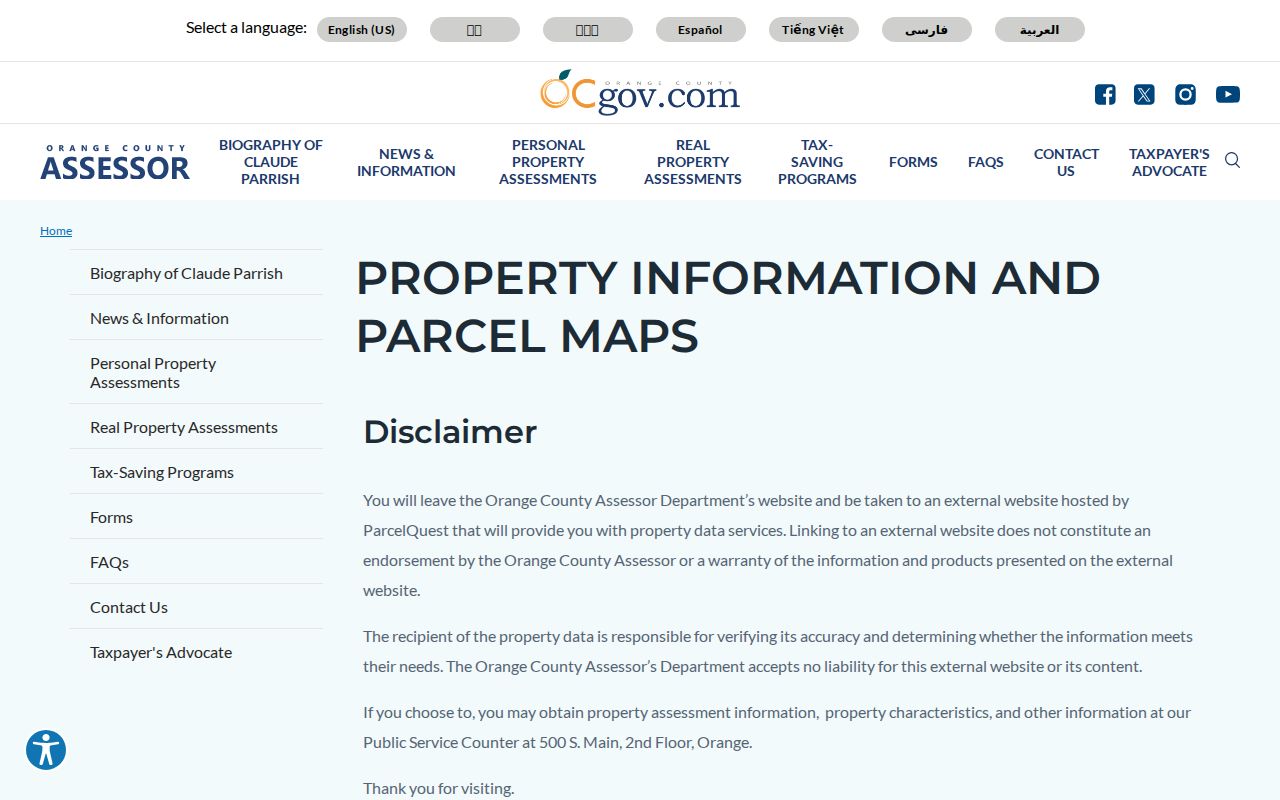
The Assessor route and the county records desks answer related but different questions: one describes the assessment record, while the others hold deeds, cases, or controlled voter data.
Orange County Resident Name Searches
A name becomes more useful when it can be tied to a parcel, case, filing, or dated event. Start with the source that matches the relationship. RecorderWorks is strongest for a person named in a deed, lien, release, or other recorded instrument. A court name search identifies a party role and case history, not a current home. DCA license results show license identity and status. Bizfile and fictitious business name filings show an organization or filing contact. These clues should not be blended into a claim about residence.
For address-led research, the chain is address to jurisdiction to APN to parcel geometry to assessee clue to recorded deed to dated confirmation. The APN is the assessor's parcel number. It ties the physical land to the parcel layer and helps avoid a postal-city mismatch. The GIS layer can show adjacent parcels, while RecorderWorks supplies party names only after a name search. The Orange County street directory by address follows that chain in greater detail.
The county's scale makes this discipline practical. A matching surname in Santa Ana, Irvine, or a coastal city is not enough. Preserve the city, middle initial, co-party, document date, case type, and legal description. If the same name appears in two custodians, compare dates and roles before treating the entries as one person.
The OC Survey parcel service is the county's clearest map layer for connecting an address to land geometry. Its parcel attributes help select an APN, but the map itself does not prove that the taxpayer or a displayed owner resides on the parcel.
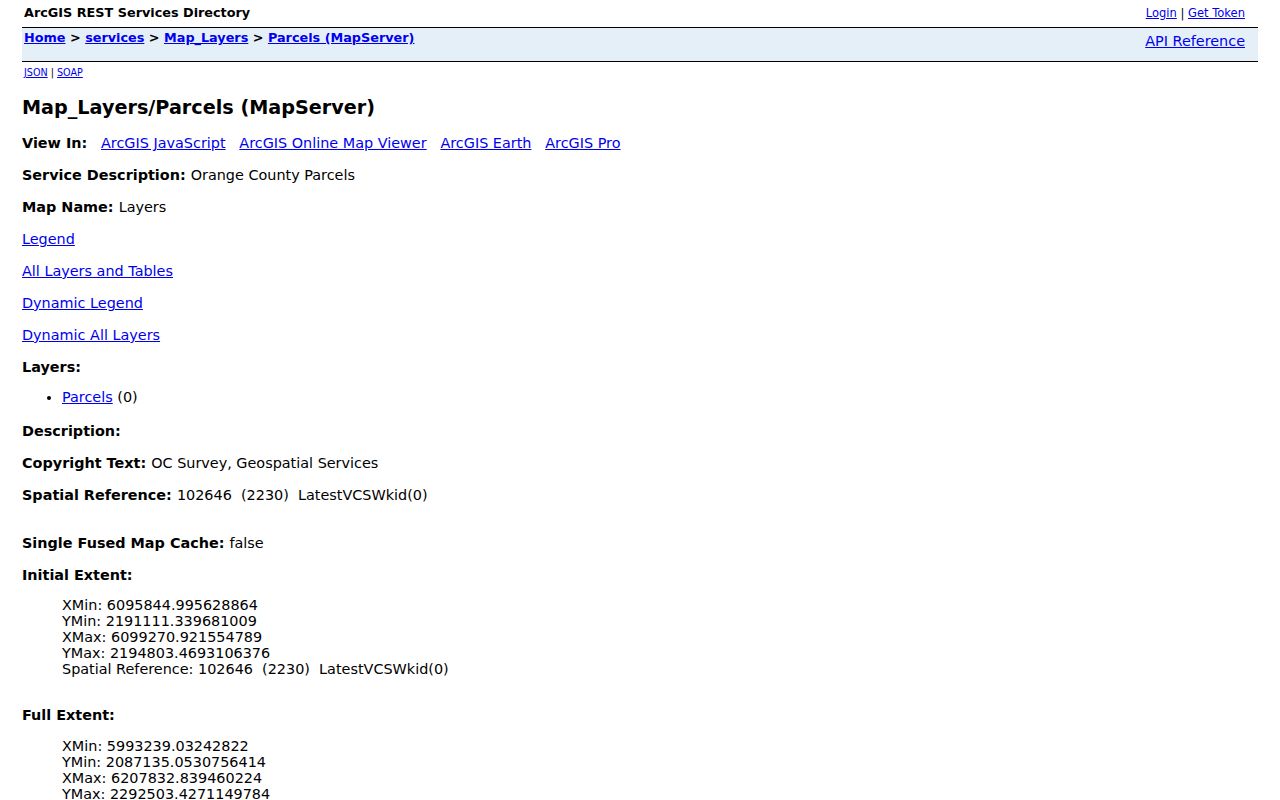
Parcel geometry is most useful as a bridge. It narrows the correct lot, clarifies nearby parcels, and gives the next records custodian a stable identifier for verification.
Orange County RecorderWorks Starts With an Index
The Clerk-Recorder's free RecorderWorks engine is a grantor-grantee index, not a shelf of document images. A grantor transfers an interest; a grantee receives one. Search the party name, narrow the date when needed, and save the instrument details before requesting a copy. The county's current page does not state the first indexed year. For documents before 1982, the useful identifiers are book, page, and instrument number. From 1982 forward, the instrument convention uses the recording year plus six digits.
| Recorder field | Use | Orange County format note |
|---|---|---|
| Grantor or grantee name | Search a party to the recorded instrument | Try spelling variants and co-parties |
| Recording date or range | Narrow a common name | Use the date as a search control, not a move-in date |
| Document number | Retrieve a known entry | 1982 forward uses year plus six digits |
| Book and page | Locate older references | Especially useful with pre-1982 instruments |
| Search and reset | Run or clear the dynamic form | Labels can change with the live interface |
The online index does not expose the image, signature, legal description, transfer-tax declaration, or return address. The copy process is separate. Mail a request with payment and a self-addressed stamped envelope to 601 N. Ross Street, Santa Ana, CA 92701. The published charge is $1 per page plus $1 certification per document or map. The counter can receive an identified request, but staff do not conduct the search for a visitor.
| Route | What it supplies | Access tradeoff |
|---|---|---|
| Free official index | Party names, dates, document type, and identifier | User searches; no document image |
| Mailed or counter copy | Recorded document image and document-dependent detail | Identifier required; $1 per page plus certification charge |
| Commercial compiler category | May combine public and purchased data | Not an official custodian; stale or merged identities require source verification |
Note: The 1982 identifier change is a filing convention, not proof that online indexing begins in 1982.
Current Orange County Residents Directory Sources
Current directory-like sources answer different questions in the Orange County residents directory, and their access rules are not interchangeable. Property data begins with land and assessment. The recorder index follows named parties. The voter route is personal or approved-purpose only. City records, business filings, professional licenses, and voluntary community contacts can place a person in a public role without proving a household connection.
| Source | Record relationship | Keeper | Access channel |
|---|---|---|---|
| Assessment and parcel data | APN, situs, characteristics, assessee or mailing clues | Orange County Assessor / ParcelQuest | Web route, counter, phone, GIS and tax inquiry |
| Recorded-document index | Parties to deeds, liens, releases, and maps | Clerk-Recorder | Free index, identified copy request, mail or counter |
| Voter information | Self status or controlled residence and election fields | California SOS / OC Vote | Self-lookup or approved-purpose application |
| Municipal records | Officials, applicants, permits, code cases, speakers | Each city; OC Public Works outside cities | City portal, clerk, counter, or focused CPRA request |
| Business and license filings | Entity, assumed name, license, agent, or public discipline | California SOS, DCA, county, or city | Named agency search or custodian request |
Use the source that fits the question. A permit identifies an applicant, contractor, project, and status. A business filing identifies a registered entity or assumed-name connection. A property display can show an assessee or mailing clue. A directory becomes more reliable when two such relationships agree on a date and place.
Orange County Voter Records
California My Voter Status is a self-lookup. A voter supplies personal details to review their own registration and election information. It is not a public name directory and it cannot be used as a casual street list. Orange County's fuller voter-data route is for qualified people or organizations with an approved purpose under Elections Code section 2194 and 2 CCR sections 19001 through 19013. The application calls for a wet original signature, supporting material, proper payment, and a copy of photo identification for mail orders.
The authorized field set can include a county, registration identifier, name, residence and mailing address, phone or email, language, birth date, gender, party, status, precinct, registration method, birthplace, status reason, assistance flags, permanent vote-by-mail flags, county voter ID, and participation history. A participation line shows an election date and method, never a selected candidate. The Orange County office is at 1300 S. Grand Avenue, Building C, Santa Ana, CA 92705. Data can be picked up or shipped for a fee under the current application instructions.
The California My Voter Status route is the right first stop for a person checking their own record. Confidential voter status for qualifying Safe at Home participants stays protected. A public-records request does not bypass the voter statute.
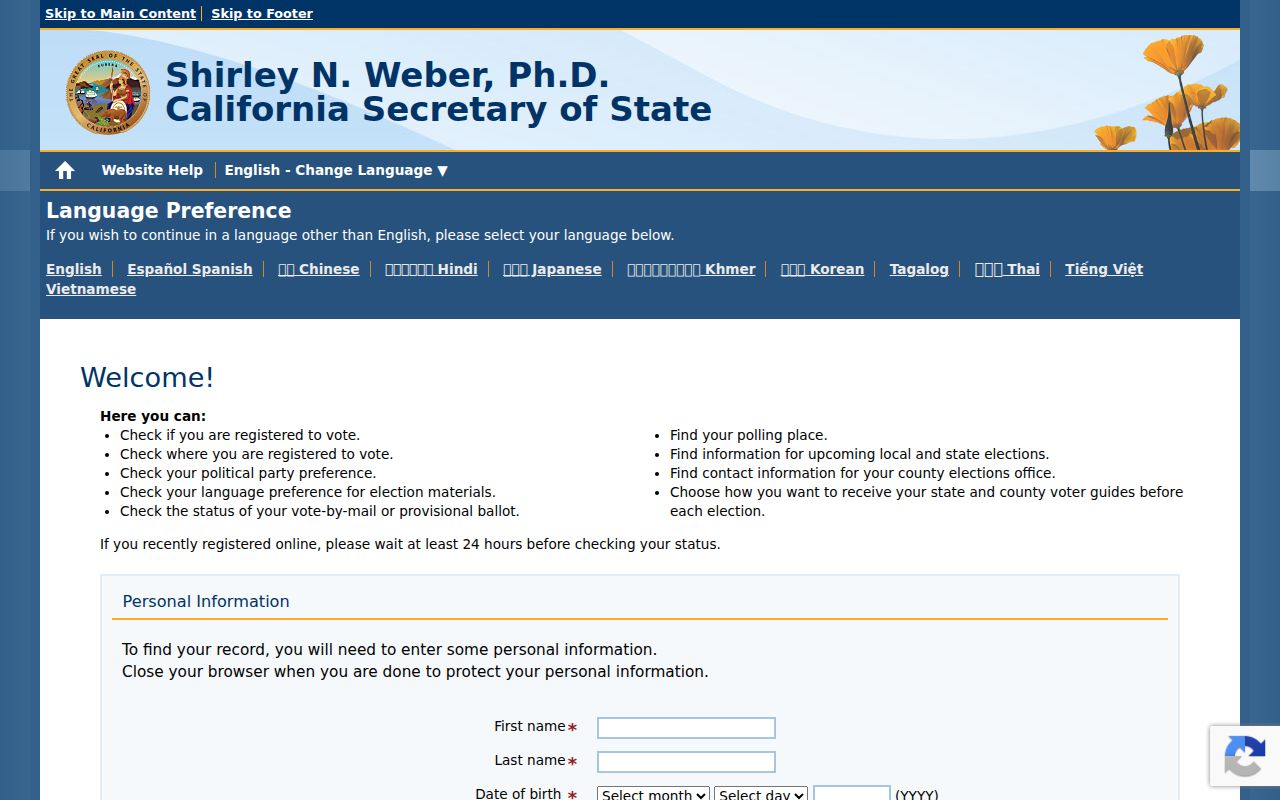
That boundary protects both the voter and the searcher. Use a public source for a public role, and use a controlled data channel only when the law and the approved purpose fit.
Note: Orange County voter lookup is self-service and restricted; a public response should never be treated as a countywide resident list.
Orange County Vital Records
Birth, death, marriage, and divorce records sit in different custody paths. The Orange County Clerk-Recorder handles county birth, death, and marriage services. CDPH Vital Records maintains statewide series, with birth records from July 1905 in its maintained coverage. Divorce decrees belong to Superior Court; a CDPH certificate of record is not the decree. California uses authorized and informational certified copies under Health and Safety Code sections 103525 and 103526 rather than a simple rule that every record opens after a fixed number of years.
- Birth
- Authorized copy needs a qualifying relationship or role and sworn statement; others may seek an informational copy.
- Death
- County or CDPH route; the copy type and statutory eligibility control access.
- Public marriage
- Authorized or informational copy may be available through the proper custodian.
- Confidential marriage
- Only parties or court or statutory authority can obtain it; there is no informational route.
- Divorce
- Superior Court holds the substantive file; CDPH supplies a certificate in its maintained series.
From January 1, 2026, CDPH fees are $31 for birth, $26 for death, $19 for marriage, and $18 for a dissolution certificate. Mail orders use the applicable form, a check or money order payable to CDPH Vital Records, and a notarized sworn statement for an authorized copy. Pre-July 1905 events may require county, church, mission, cemetery, newspaper, and archive sources.
The Orange County vital-records service page shows the county application path and the division between county records and a court divorce file.
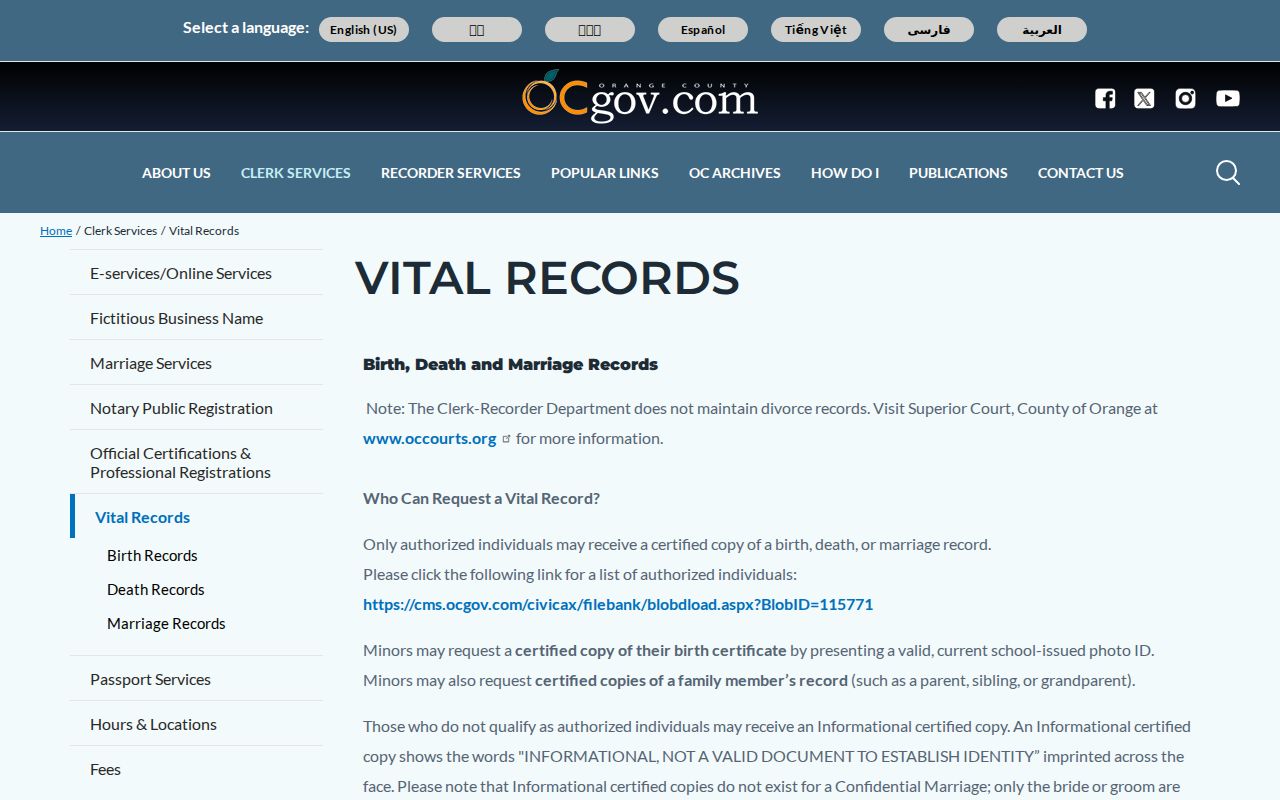
These copies can confirm an event, date, place, or relationship. They do not create a current resident list, and a no-record result does not prove that an event never occurred elsewhere or under another spelling.
Orange County Court Records
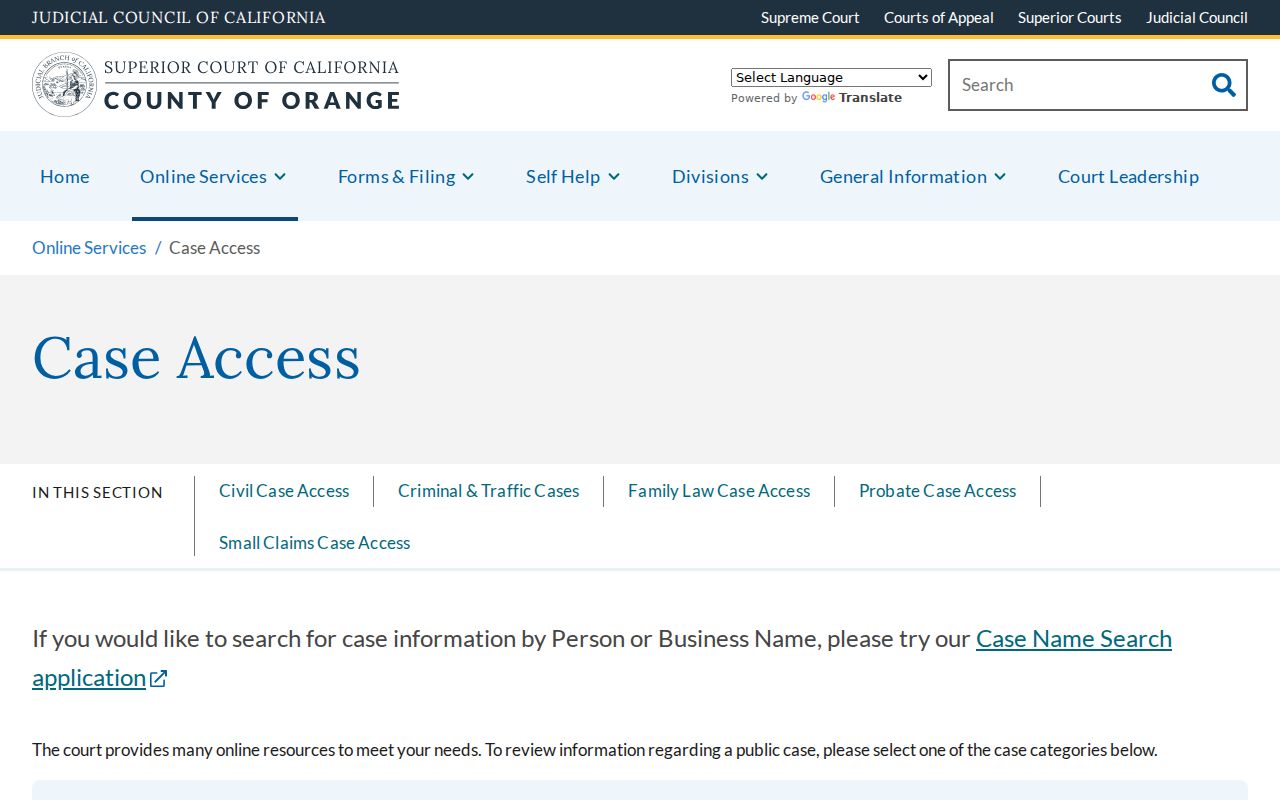
Superior Court Case Access separates civil, criminal and traffic, family, probate, and small claims records. Case Name Search requires free enrollment and can find a person or business by name, but remote coverage is narrower than courthouse access. The court describes records reaching the late nineteenth century, while civil copy instructions describe searches from 1889 to the present. Retention varies by case type, and older indexes are held at the appropriate Justice Center.
Remote civil coverage is specific. Unlimited or complex civil summaries reach from 1996, limited civil summaries from 2005, and most civil documents filed on or after January 1, 2008 may be viewable or downloadable for fees. Case results can show a case number, caption, party roles, filing date, court location, status, hearings, and a register of actions. A result is not the official file, and sealed, confidential, juvenile, adoption, and destroyed material stays unavailable.
The Orange County Case Access hub is the appropriate online entry point for a category or case number.
When a case number or document is known, Form L-3009 supplies the court's fallback. It asks for the parties, requested document, filing date, requester details, delivery, and payment. Civil copies are $0.50 per page, certification is $40 per document, and exemplification is $50. Mail requests need a 9-by-12 self-addressed stamped envelope. At the correct Justice Center, older indexes and files can be reviewed in person; an off-site file may take several days, and non-imaged review requires a photo ID deposit.
Note: A court party match is a legal-record connection, not proof of current residence or of every allegation in a filing.
Orange County Business Records
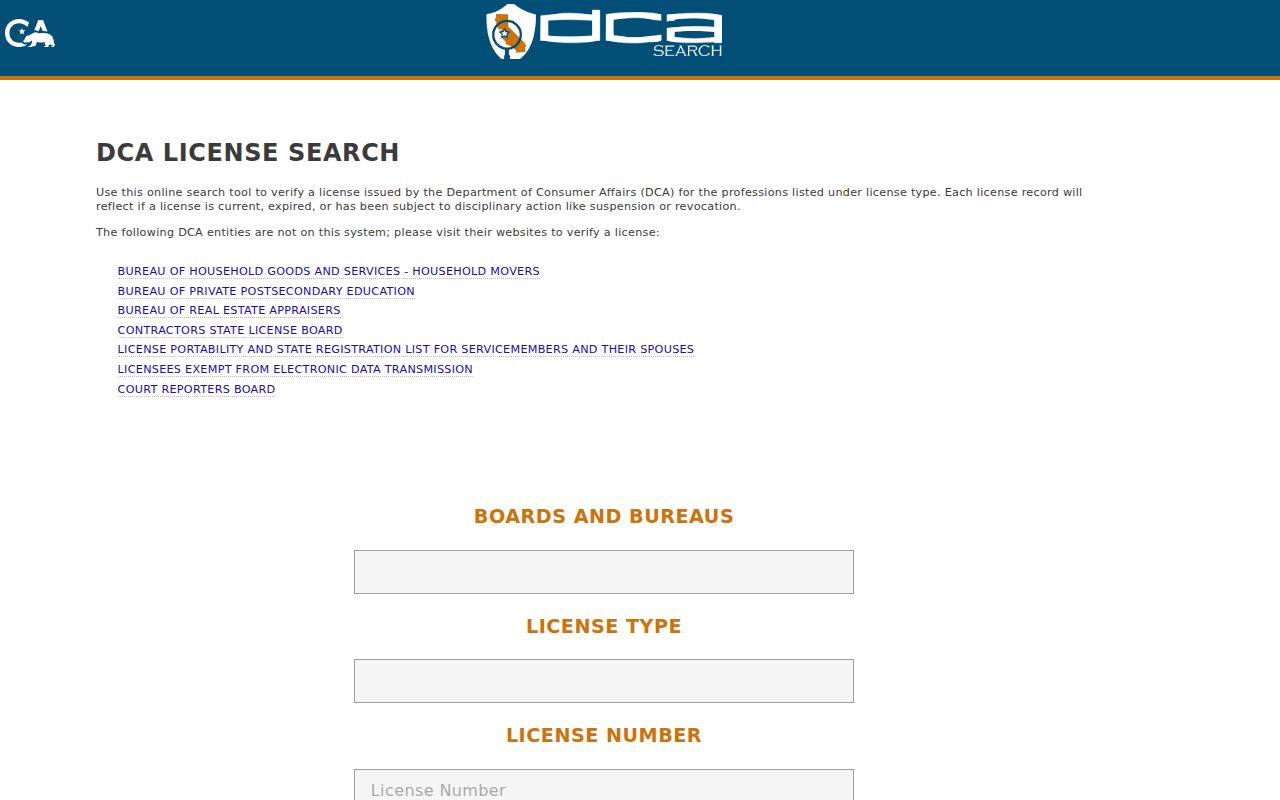
Business and professional sources can help separate people who share a name, but they describe affiliations rather than a household. California Secretary of State bizfile searches an entity name or number and may show status, jurisdiction, agent, address, and filing history. County fictitious business name records connect an assumed name to a registrant at the filing date. The Department of Consumer Affairs search can show a license type or number, status, dates, and discipline links. Local permits, environmental health records, and alcohol-license records belong to their own custodians.
Read an agent, contractor, or permit applicant as the role shown. A registered-agent address is a service address. A permit applicant may be an owner, architect, or contractor. A license location may be a business premise. Preserve the filing date and entity or license number before comparing a record to property or court information.
The California Department of Consumer Affairs license search is a useful state-level identity check when a name is tied to a public license.
That distinction keeps a public business connection from being mistaken for a current residence. It also gives a lawful researcher a second dated source for same-name control.
Orange County CPRA Records
The California Public Records Act is a fallback when an identifiable, existing, nonexempt record is not exposed online. Government Code sections 7920.000 through 7931.000 ordinarily give an agency 10 calendar days to determine whether responsive records exist, with a possible 14-day extension for unusual circumstances. That is a determination period, not a promise that production will be complete by the deadline. Inspection is ordinarily free, while direct duplication costs may apply.
Ask the actual custodian for a record already kept. A city clerk handles council records, rosters, and city requests. A city building department handles permits and code cases inside that city. OC Public Works serves unincorporated land. The Clerk-Recorder handles a recorded instrument through its paid copy path, and the court uses court access rules rather than ordinary CPRA processing. A request cannot require an agency to create a new list of residents or bypass sealed, voter, vital, or safety restrictions.
The California Attorney General's CPRA explanation describes the request and response framework.
A focused request names the city or county custodian, record type, address or case identifier, date range, and preferred inspection or copy method. That level of detail helps an office search the record set it actually controls.
Orange County Same-Name Lookup
Orange County's size makes identity control more than a formality. The 2020 Census counted 3,186,989 residents, while the 2025 QuickFacts estimate is 3,149,507. QuickFacts also reports more than a million households in the 2020-2024 period. A common name can appear in several cities, parcels, court captions, license records, and newspaper notices without representing one person.
Keep middle initials, suffixes, compound surnames, diacritics, transliterations, co-parties, legal descriptions, case type, and event date. Search marked and unmarked spellings. California AB 64 permits approved diacritical marks on new or amended vital certificates in 2026, which makes exact spelling useful while older indexes may still omit marks. Treat every address as date-stamped. Compare two independent records before linking them.
- Roll
- A record set maintained for a defined purpose, such as assessment or voter administration, not a complete household list.
- Index
- A pointer to a record or party. RecorderWorks supplies identifiers, while a copy supplies the document itself.
- Parcel
- A mapped unit of land identified by an APN and legal description.
- Criss-cross directory
- A reverse directory arranged by street and number, useful for listed household or business clues at a point in time.
Note: A matching name and ZIP code is weaker evidence than a matching name, date, parcel, co-party, and record purpose.
Historical Orange County Residents Directory Shelves
Historical resident directories are decentralized across Orange County because the county contains 34 incorporated cities and because directories were issued city by city or as metropolitan and suburban volumes. No authoritative exhaustive publisher and year run was located. Catalogs should be checked by city, title, and year rather than filling gaps with an assumed Polk sequence. OCPL, municipal libraries, university special collections, FamilySearch, and Orange County Archives each may hold a different slice.
A directory can place a named household at an address for an edition year, show an occupation or spouse notation, and offer a reverse street section. It can also omit a person because of a publication gap, relocation, death, unlisted status, or coverage boundary. The full collection trail belongs in the Orange County city directory archive, where the reading method and local holdings are separated from current parcel research.
OCPL Libraries Fill Orange County Record Gaps
OC Public Libraries' History and Genealogy resources combine licensed databases, digitized newspapers, and community memory. Ancestry Library Edition is available in a branch with a full-privileges card and full privileges. HeritageQuest Online and Fold3 add census, family-history, map, and military material through library access. OCPL Digital Newspapers are in-library resources that can be viewed, printed, or downloaded. NewsBank includes the Orange County Register from 1987 to the current run and Irvine World News from 2003 to the current run.
Named local newspaper ranges add older neighborhood context: Coastline Dispatch from San Juan Capistrano, 1931-1968; Laguna Beach titles from 1919-1989; and San Clemente Sun-Post from 1937-2021, among other south-coast titles. OC Stories, Little Saigon Stories, Indigenous Voices of San Juan Capistrano, OC Surf Stories, and the OC Memory Lab preserve community evidence that formal government rolls do not contain.
The OCPL History and Genealogy collection is a practical fallback when a name, address, or family story does not appear in a county portal. Library staff and local organizations can help identify a catalog item, but they are not official certifiers of a resident record.
Note: A library database can reveal a historical lead while still requiring the item title, issue date, page, and access conditions to be recorded.
Orange County Pre-1889 Records
Orange County was formed from Los Angeles County in 1889, with Santa Ana as the county seat. A person who lived in today's Orange County in 1880 may therefore appear in a Los Angeles County census or record catalog. Search rancho, subdivision, city, and parent-county labels along with the modern county name. The change affects census geography, early deeds, court references, directories, and archive catalogs.
Sanborn mapping supplies one verified bridge for old Santa Ana: the digitized volume covers 1906 through August 1949 and contains 64 sheets. The maps show building footprints, materials, uses, and older street context. Paired with a directory entry, deed legal description, or newspaper notice, they can explain why a number or block looks different across years.
Orange County Resident Privacy
Some records remain limited because the record itself is sensitive or because a safety program applies. DMV personal information is protected. Utility customer accounts and many household members never appear in a public source. Juvenile, adoption, sealed family and confidential marriage records have separate rules. California's Safe at Home program provides a substitute mailing address and confidential voter registration for qualifying participants under Government Code sections 6205 through 6216. It does not retroactively erase every older public record.
California privacy rights can apply to covered businesses and data brokers, but a request to a private broker does not erase a deed, court file, or assessment record held by its custodian. For a displayed Social Security number or other unlawful disclosure, contact the Clerk-Recorder about the source record rather than altering a reposted copy. A source correction belongs with the office that created or maintains the record.
Lawful personal use. Orange County records can support family history, property research, civic work, and personal safety questions. Do not use a name, address, voter record, or directory entry to stalk, harass, intimidate, or harm another person.
Note: A privacy program can change what a lawful search returns without proving that the person or event never existed.