
Where Orange County City Directories Are Held
The known Orange County directory trail is decentralized. Present county territory belonged to Los Angeles County until 1889, and printed directories were issued city by city or as metropolitan and suburban volumes. No authoritative page supplied an exhaustive publisher and year run for every city, so the table uses verified scope and access rather than inventing a complete sequence. Check a catalog record, item title, and edition year before describing a gap as a missing publication.
| Collection | Verified years or scope | Where held | Access |
|---|---|---|---|
| City, metropolitan, and reverse directories, publisher varies | Varies by city and catalog item | OCPL, municipal libraries, universities, FamilySearch | Catalog, branch, or licensed database |
| OCPL Digital Newspapers, digitized microfilm | Named titles include 1919-2021 ranges | Orange County Public Libraries | In-library view, print, and download |
| Orange County Register, NewsBank | 1987-current | OCPL licensed access | Full-privileges library card |
| Irvine World News, NewsBank | 2003-current | OCPL licensed access | Full-privileges library card |
| Santa Ana Sanborn maps, Fire Insurance map volume | 1906-August 1949; 64 sheets | Library of Congress | Free digitized images |
| Federal census schedules | 1790-1950 public; 1950 newest public in 2026 | NARA, Ancestry, FamilySearch | Public historical access varies by host |
| OC Stories and community-memory collections | Modern oral history and images | OCPL digital resources | Online collection access |
Each row answers a different question. A directory volume supplies names and address context. A newspaper supplies notices and events. A Sanborn sheet stabilizes a building footprint. A census supplies a household snapshot every ten years. A community collection preserves memory that may never have entered a government roll. Those differences matter when an entry is absent.
Orange County City Directory Split
Orange County has 34 incorporated cities and unincorporated communities, so a directory shelf follows local growth rather than one county clerk's publishing plan. Anaheim, Fullerton, Huntington Beach, Newport Beach, Orange, and Santa Ana library systems may hold local material that does not appear in an OCPL search. University special collections at UC Irvine and Cal State Fullerton add regional planning, oral histories, campus publications, and community collections.
The county boundary also hides an older catalog issue. An 1880 resident of present-day Orange County may be listed under Los Angeles County because Orange County did not yet exist. Search the parent county, old city or rancho name, subdivision, and variant place label. The record's original geography should be preserved alongside the modern place name.
Note: A blank Orange County directory year can reflect a catalog gap, a different city volume, a publication pause, or an address outside that edition's coverage.
OCPL's Orange County Directory Research Shelf
OC Public Libraries' History and Genealogy resources are the broadest countywide starting shelf. Ancestry Library Edition is available inside an OCPL branch with a full-privileges card and full privileges. HeritageQuest Online adds census, family history, maps, and guides. Fold3 supplies military records and images through library access. OCPL Digital Newspapers are in-library, with view, print, and download options. NewsBank provides the Orange County Register from 1987-current and Irvine World News from 2003-current.
The OCPL History and Genealogy resource page is the route to current database rules and local-history links. Use a branch librarian when a catalog search returns a title without an image, when a licensed database is blocked outside the branch, or when a city volume may be held by a municipal system. Library staff can identify a collection; they do not certify a person as a current resident.
Local genealogy organizations can add finding aids and family-history context. The Orange County California Genealogical Society, Genealogical Society of North Orange County California, South Orange County California Genealogical Society, Orange County Jewish Genealogical Society, Orange County FamilySearch Library, and Orange County Archives are research contacts, not a countywide resident roster.
Orange County Newspapers Bridge Directory Gaps
When a directory volume does not appear for a year, local newspapers can show an obituary, address event, social notice, civic role, or business connection. OCPL's named digitized ranges include Coastline Dispatch from San Juan Capistrano, 1931-1968; Laguna Beach Life, Laguna Beach Post, and Laguna News Post, 1919-1989; San Clemente News, 1987-1989; and San Clemente Sun-Post, 1937-2021. Other south-coast titles include Beach Cities News, Capistrano Valley News, Dana Point News, El Heraldo de San Clemente, Laguna Leisure World, and South Coast News.
The OCPL digital-newspapers collection identifies the titles and access limits. These files are digitized microfilm and are in-library resources. Search a surname, street, organization, or event, then save the title, issue date, page, and wording that supports the address clue. A newspaper notice is evidence of a public event, not a complete household entry.

The newspaper layer is especially useful for the years between directory editions. It can explain a move, death notice, community role, or building change without pretending that every absent name has the same explanation.
Reading an Orange County City Directory Entry
A city directory entry is a reading schema, not a guaranteed field list for every Orange County volume. The alphabetical section commonly gives a surname, given name or initial, spouse in parentheses, occupation or employer, and home address. Some volumes use marks such as “r” for resides, “h” for householder, or “wid” for widow. The volume's own abbreviation key controls. Do not expand a mark from memory when the edition provides its own explanation.
| Surname and given name | Primary alphabetical entry; preserve initials, spelling, and name order. |
|---|---|
| Spouse notation | May appear in parentheses; it is a clue to a household relationship in that edition. |
| Occupation or employer | Follow the printed field and date; it is not an address or identity guarantee. |
| Street address | House number and street wording for the edition year. |
| r, h, or wid | Common examples include resides, householder, or widow; confirm the local key. |
- Criss-cross section
- The reverse half arranged by street and number, sometimes with occupant, business, and cross-street information.
- Householder index
- An index organized around the named head or householder of an entry, when a volume uses one.
- Abbreviation key
- The volume's legend for short marks. Photograph or transcribe it before reading a long run.
- Index versus image
- An index points to a name or page; the scanned page preserves the context and printed marks.
Note: A city-directory entry is a dated clue about an address or subscriber, not a complete register of every Orange County household.
Reverse Sections Make City Directories Address Tools
The reverse section changes the search direction. Instead of starting with a surname, find the street, number, occupant or business, and cross streets. This is useful when a family name is uncertain, when a house changed hands, or when the goal is to compare the nearby block in two editions. It is also where old number changes or a reused street name become visible.
Record the exact title, publisher as printed, edition year, page, street spelling, and number. Compare the reverse entry with the alphabetical entry and the abbreviation key. A blank reverse entry may mean that the person was not listed, that the volume lacks a reverse section, that the address was outside coverage, or that the edition has a publication gap.
Modern parcel work belongs with the Orange County street directory's address chain. The historical reverse section belongs here because it explains how an old address was listed, not who occupies the parcel today.
Tracing Orange County City Directories
Directory research becomes stronger when each edition is treated as a dated snapshot. Start with the most certain name or address, follow it through adjacent years, then use a census year to test the household composition. The 1950 census is the newest public decennial census as of 2026 under the 72-year rule. A directory is more frequent than a census when a run exists, while a census supplies a broader household view.
- Write the first exact name, address, city, volume title, and edition year.
- Check adjacent directory years and note every spelling, spouse, occupation, and street change.
- Use the reverse section to inspect the number and nearby entries, then compare the volume's key.
- Pair each directory period with the nearest public census and keep the parent-county label for earlier years.
- Close a disappearance with newspapers, an obituary, cemetery material, probate, a deed, or a later directory rather than guessing.
Disappearing from a directory can mean a move, death, omission, publication gap, or an address outside the publisher's reach. A later deed can show an owner transfer, while a newspaper can show an event. Neither proves that the same household stayed in place between editions.
Santa Ana Maps Anchor City Directories
Santa Ana's digitized Sanborn volume is a particularly useful companion to an Orange County city directory. The verified set covers 1906 through August 1949 and contains 64 sheets. The maps can show building footprints, materials, uses, and street context. They do not name every occupant. Their value is structural: a footprint or old number can help decide whether two directory entries refer to the same place.
The Library of Congress Santa Ana Sanborn volume provides free digitized map images. Pair a sheet with a directory reverse entry, the legal description in a deed, and a newspaper date. An older address can then be read as a place with a shape and use, not just a string of text.
| Historical checkpoint | What it contributes |
|---|---|
| 1889 county formation | Search present-day Orange County under Los Angeles County for earlier catalog records. |
| 1906-August 1949 Santa Ana maps | Building footprint, materials, use, and older street context. |
| 1919-1989 selected coastal newspapers | Notices and address events between directory editions. |
| 1950 public census | Newest public decennial household snapshot as of 2026. |
Note: A Sanborn sheet can anchor a building's footprint and use, but it does not identify every person who occupied that structure.
Orange County Archives and Community Memory
Orange County Archives holds county-government historical records, maps, and photographs through a catalog and research request. Municipal libraries may hold city-specific directories, old phone books, yearbooks, or local-history files. University special collections add regional and community materials. FamilySearch can provide catalog and family-history paths. Contact a custodian with a city, exact address or person, year range, title if known, and the desired collection.
The Orange County Archives research entry point is useful when a directory reference leads to a county map, administrative record, or photograph rather than a digitized page. Genealogy groups may point to cemetery transcriptions, vertical files, and donated collections, but they are not official certifiers and should not be assumed to perform a resident lookup.
OCPL's Little Saigon Stories and Indigenous Voices of San Juan Capistrano preserve community memory that may connect a family, neighborhood, or migration story to a place. These collections add human context without changing the limits of a directory entry.
Business Filings Add Orange County Context
Some directory questions lead to a business name, public role, or filing address rather than a household. California Secretary of State bizfile can show an entity name or number, status, jurisdiction, agent, address, and filings as available. A county fictitious business name record supplies an assumed-name connection at its filing date. A registered agent address is a service address, and a business premise is not a private residence by default.
The California business entity search is a useful companion when a city directory lists a proprietor or business. Compare the entity number, date, city, and address with the historical entry. Keep the source's role intact instead of turning a filing contact into a household claim.
Business evidence can explain why a name appears in a directory, newspaper, or permit record. It is one context layer among several, not a substitute for the original directory page.
Orange County Records Confirm Old Directories
An old directory entry should be verified with a source that fits the claim. A deed or assessment record can connect an address to land and an owner at a date. A court or probate file can document a party role or estate event. A newspaper can explain a move or death notice. Current parcel research belongs with the Orange County street directory by address, while a one-person legal-record check belongs with the appropriate custodian rather than the historical volume alone.
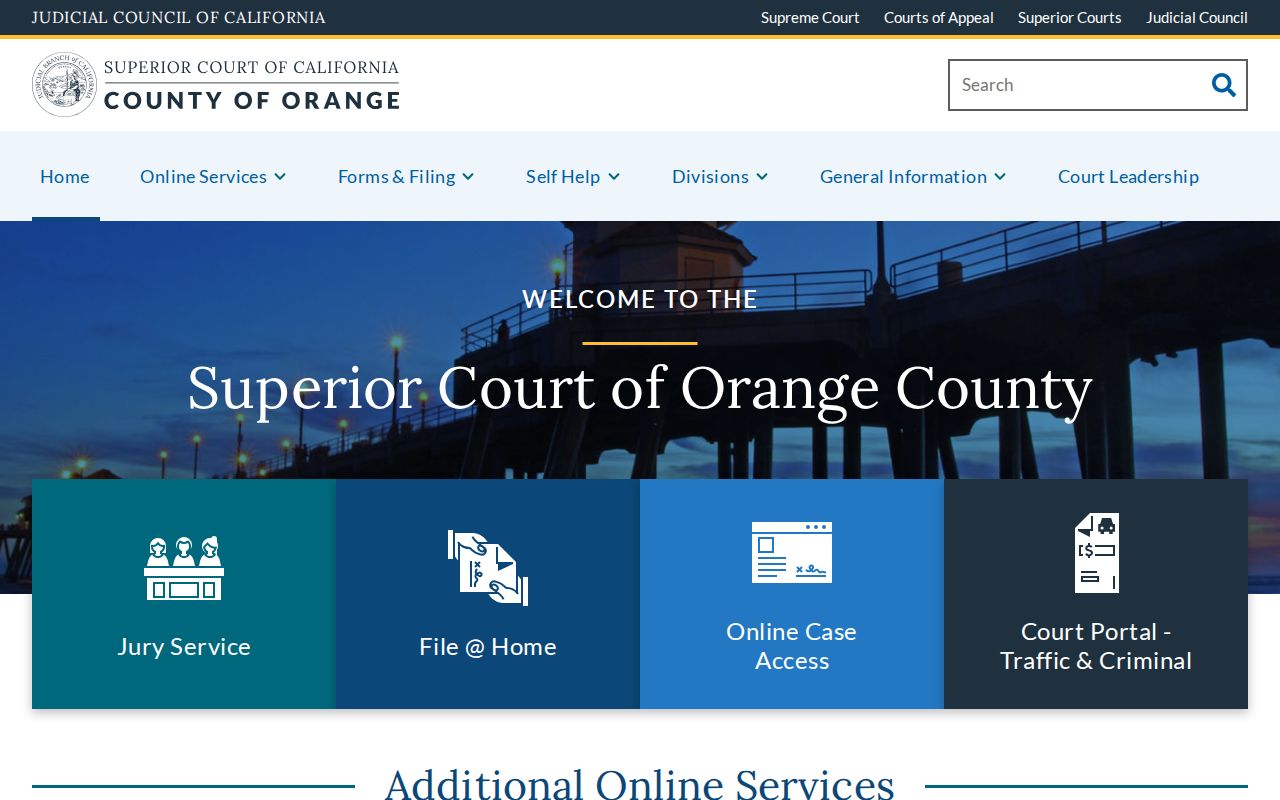
The Superior Court is a separate records keeper. Case Access and Case Name Search can identify a later party connection, but remote coverage is narrower than courthouse access and retention varies. Sealed, juvenile, adoption, confidential, and destroyed records remain unavailable. A modern match should preserve the case number, party role, filing date, and court location.
The Orange County Superior Court home provides the court's current access routes.
Verification is strongest when the old entry, the modern record, and the geographic clue agree while their limits remain visible. A directory volume can illuminate a past household. It cannot turn a historical listing into proof of a present address.
Note: A later parcel or license record can test an older directory clue while keeping the original edition year and source visible.