
Finding the Orange County Residents Directory
No single roll answers every name or address question here. The Orange County residents directory is really a set of separate indexes. The right entry point depends on the clue in hand. An address points toward the Assessor, ParcelQuest, the county parcel layer, and the tax inquiry. A name can point anywhere. RecorderWorks suits a deed party. A court index suits a litigant. A business filing or an old city directory suits other roles. Each record answers a different question. An assessee is not necessarily an occupant. A deed party is not a whole household. A directory entry carries its own publication date.
The strongest Orange County residents directory search keeps exact spelling, middle initial, suffix, city, address, and date attached to every result. A second independent record separates a genuine lead from a same-name coincidence. Work in that order, and note where online access ends.
- Choose the starting clue. Write down the name, address, event, or time period without changing its spelling.
- For an address, use the Assessor route, ParcelQuest, OC GIS, and the Treasurer-Tax Collector inquiry to identify the parcel and jurisdiction.
- For a property-related name, search the Clerk-Recorder index, then preserve the document number or book, page, and instrument reference.
- Use the Superior Court, California license, business, vital, or controlled voter channel only for the record type it actually keeps.
- For an older household, move to OCPL, municipal libraries, newspapers, census collections, the Archives, or a focused CPRA request for an existing record.
Note: A public entry can establish a record connection without proving that every person at an address lives there now.
Orange County Residents Directory Desks
Four desks do most of the first-pass work. The Clerk-Recorder holds the recorded-document index plus vital-record services. The Assessor routes property data through ParcelQuest and answers assessment questions at its public counter. The Superior Court keeps case records and party searches separate from county land records. Voter rolls sit with the Registrar of Voters. The Secretary of State offers the self-lookup route instead. None of these offices merges its results into a master list of Orange County residents, so each directory record must be pulled where it lives.
Orange County Clerk-Recorder
601 N. Ross Street
Santa Ana, CA 92701
714-834-2500
Orange County Assessor
500 S. Main Street, second floor
Orange, California
714-834-2727
Orange County Registrar of Voters
1300 S. Grand Avenue, Building C
Santa Ana, CA 92705
Approved-purpose data route
The recorder explains procedures by phone. Staff will not search for callers, in writing, or at the counter. Get the identifier from the index first. A copy request can then be mailed to the Ross Street address. The Assessor counter and its phone line can help. They step in when a parcel display is unclear. Voter data works differently. It requires an approved-purpose application, support, identification for mail orders, and payment. Use the channels. A failed web search never proves that a record is missing.
The Assessor's property-information page links an address clue to assessment details and property characteristics.
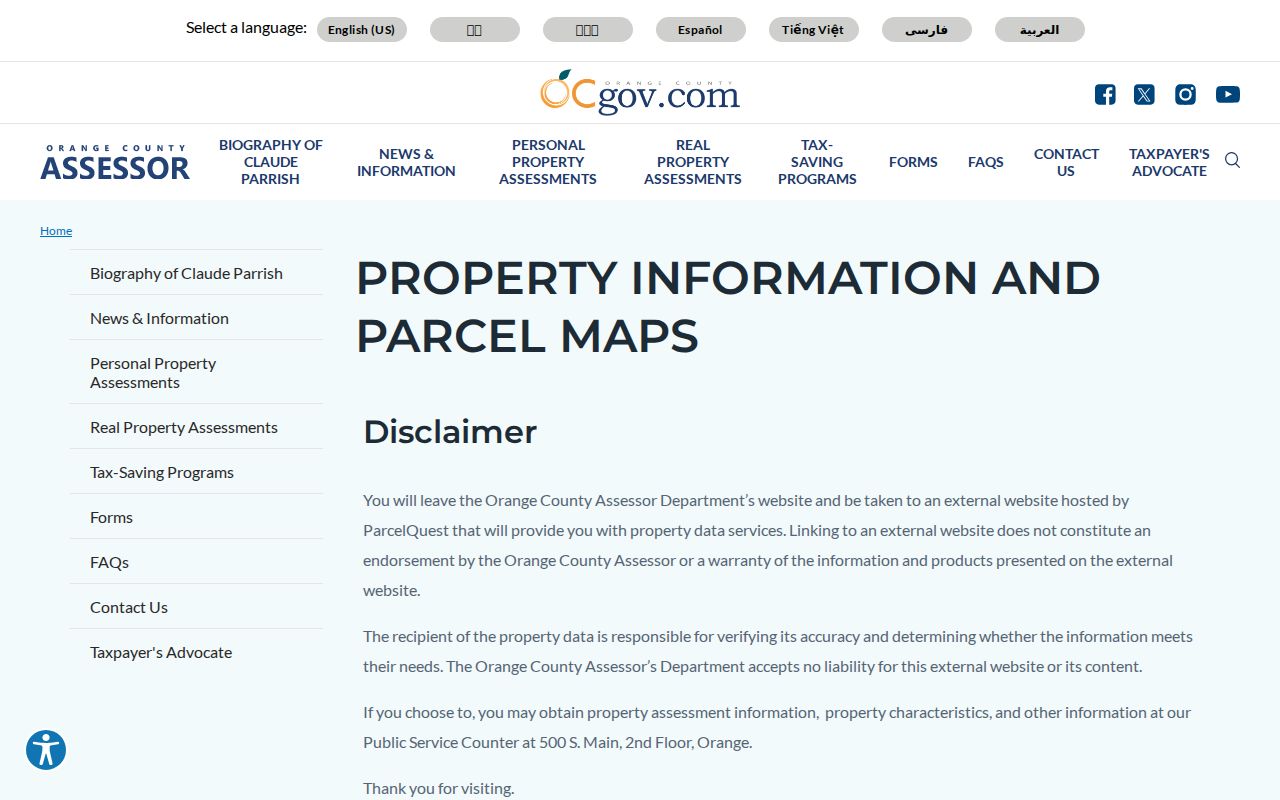
These desks answer related but separate questions. One describes the assessment record for a parcel, while the others hold deeds, court cases, or tightly controlled voter rolls, so a full Orange County residents directory answer may require all of them.
Orange County Resident Name Searches
A name earns its weight once it ties to a parcel, a case, a filing, or a dated event. Start where the relationship fits. RecorderWorks is strongest for a person named in a deed, lien, or release. A court name search shows a party role. It does not show a current home. DCA license results give license identity and status. Bizfile and fictitious business name filings surface an organization or its filing contact. None of these proves residence.
Address-led research runs one direction. The chain is address to jurisdiction to APN to parcel geometry to assessee clue to recorded deed to dated confirmation. The APN is the assessor's parcel number. It ties the land to the parcel layer and prevents a postal-city mismatch. The GIS layer shows adjacent parcels. RecorderWorks supplies party names only after its own name search. The Orange County street directory by address follows that chain in detail.
County scale demands discipline. A shared surname in Santa Ana, Irvine, or a coastal city proves nothing. Keep the city, middle initial, co-party, document date, case type, and legal description. When the same name appears in two custodians, compare dates and roles before calling it one person.
The OC Survey parcel service is the county's clearest map layer for tying an address to land geometry. Its parcel attributes help select an APN. The map still does not prove that a taxpayer or displayed owner lives there.
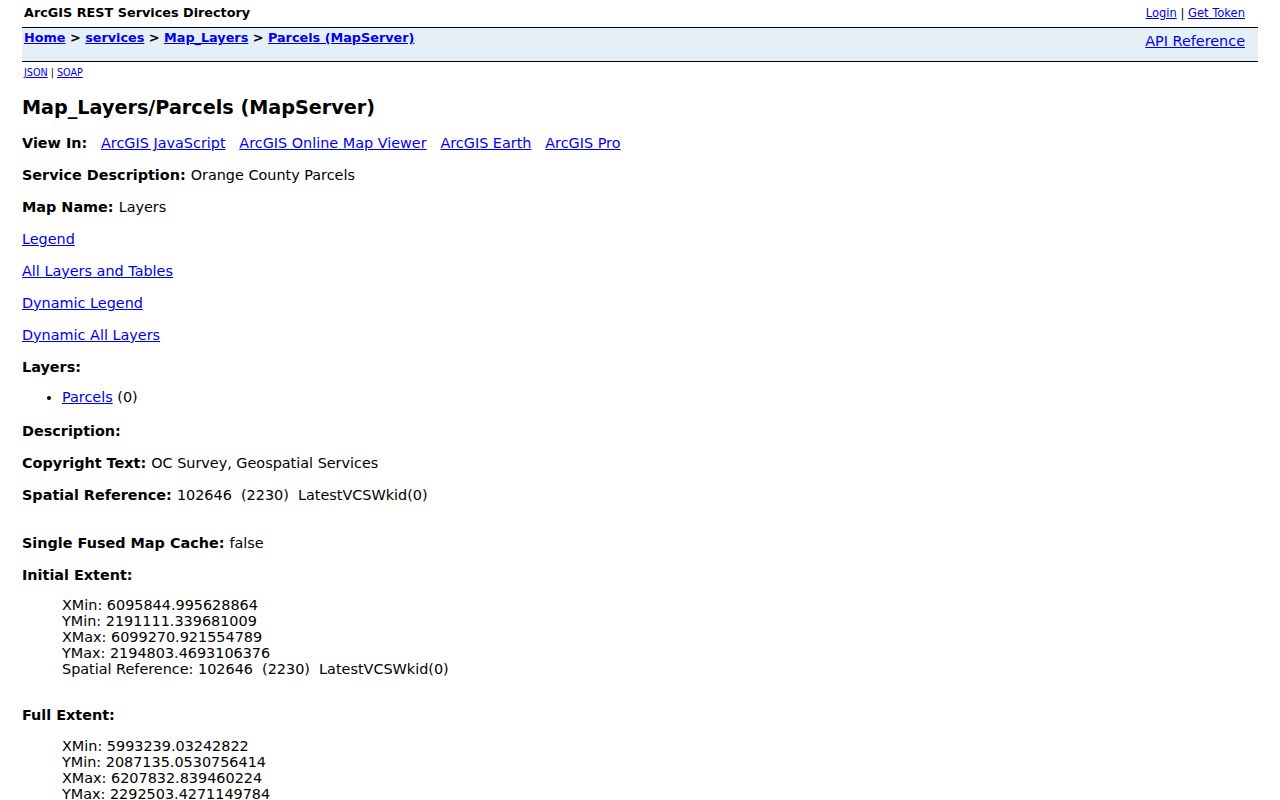
Parcel geometry works best as a bridge. It narrows the right lot, clarifies neighboring parcels, and hands the next records custodian a stable identifier worth verifying.
Orange County RecorderWorks Starts With an Index
RecorderWorks is a free grantor-grantee index, not a shelf of document images. A grantor transfers an interest. A grantee receives one. Search by party name. Narrow the date when needed. Save the instrument details before requesting a copy. The county's page does not state the first indexed year. Before 1982, the useful identifiers are book, page, and instrument number. From 1982 forward, the instrument runs the recording year plus six digits.
| Recorder field | Use | Orange County format note |
|---|---|---|
| Grantor or grantee name | Search a party to the recorded instrument | Try spelling variants and co-parties |
| Recording date or range | Narrow a common name | Use the date as a search control, not a move-in date |
| Document number | Retrieve a known entry | 1982 forward uses year plus six digits |
| Book and page | Locate older references | Especially useful with pre-1982 instruments |
| Search and reset | Run or clear the dynamic form | Labels can change with the live interface |
The index is only a starting point. It hides the image, the signature, and the legal description. The transfer-tax declaration and the return address are hidden too. Getting a copy is a separate step that runs by mail. Send an identified request with payment and a self-addressed stamped envelope to 601 N. Ross Street, Santa Ana, CA 92701. The published fee is $1 per page. Certification adds $1 for each document or map. Walk-in delivery works too, though the counter staff will not perform the search for you.
| Route | What it supplies | Access tradeoff |
|---|---|---|
| Free official index | Party names, dates, document type, and identifier | User searches; no document image |
| Mailed or counter copy | Recorded document image and document-dependent detail | Identifier required; $1 per page plus certification charge |
| Commercial compiler category | May combine public and purchased data | Not an official custodian; stale or merged identities require source verification |
Note: The 1982 identifier change is a filing convention, not proof that online indexing begins in 1982.
Current Orange County Residents Directory Sources
Different sources answer different questions in the Orange County residents directory. Their access rules never overlap cleanly. Property questions begin with land and assessment data. The recorder index works through named parties instead. Voter data stays closed to casual browsing and opens only for personal or approved-purpose use. City records, business filings, professional licenses, and voluntary community contacts can tie a person to a public role. None of them proves where someone actually lives.
| Source | Record relationship | Keeper | Access channel |
|---|---|---|---|
| Assessment and parcel data | APN, situs, characteristics, assessee or mailing clues | Orange County Assessor / ParcelQuest | Web route, counter, phone, GIS and tax inquiry |
| Recorded-document index | Parties to deeds, liens, releases, and maps | Clerk-Recorder | Free index, identified copy request, mail or counter |
| Voter information | Self status or controlled residence and election fields | California SOS / OC Vote | Self-lookup or approved-purpose application |
| Municipal records | Officials, applicants, permits, code cases, speakers | Each city; OC Public Works outside cities | City portal, clerk, counter, or focused CPRA request |
| Business and license filings | Entity, assumed name, license, agent, or public discipline | California SOS, DCA, county, or city | Named agency search or custodian request |
Match the source to the question. A permit names an applicant, a contractor, a project, and its status. A business filing ties a name to a registered entity or an assumed name. A property display can reveal an assessee. It can also surface a mailing clue. The directory grows stronger whenever two such relationships agree on the same date and place.
Orange County Voter Records
California My Voter Status is a self-lookup, nothing more. A voter enters personal details and reviews their own registration and election information. It is not a public name directory. It cannot serve as a casual street list either. The fuller Orange County voter-data route stays limited to qualified people and organizations acting under an approved purpose, following Elections Code section 2194 and 2 CCR sections 19001 through 19013. The application demands a wet original signature, supporting material, proper payment, and photo identification for mail orders.
The authorized field set can include a county, registration identifier, name, residence and mailing address, phone or email, language, birth date, gender, party, status, precinct, registration method, birthplace, status reason, assistance flags, permanent vote-by-mail flags, county voter ID, and participation history. Each participation line records an election date and method. It never records a chosen candidate. The Orange County office sits at 1300 S. Grand Avenue, Building C, Santa Ana, CA 92705. Under the current application instructions, data can be picked up or shipped for a fee.
For anyone checking their own record, the California My Voter Status route is the right first stop. Confidential status for qualifying Safe at Home participants remains protected. A public-records request cannot bypass the voter statute.
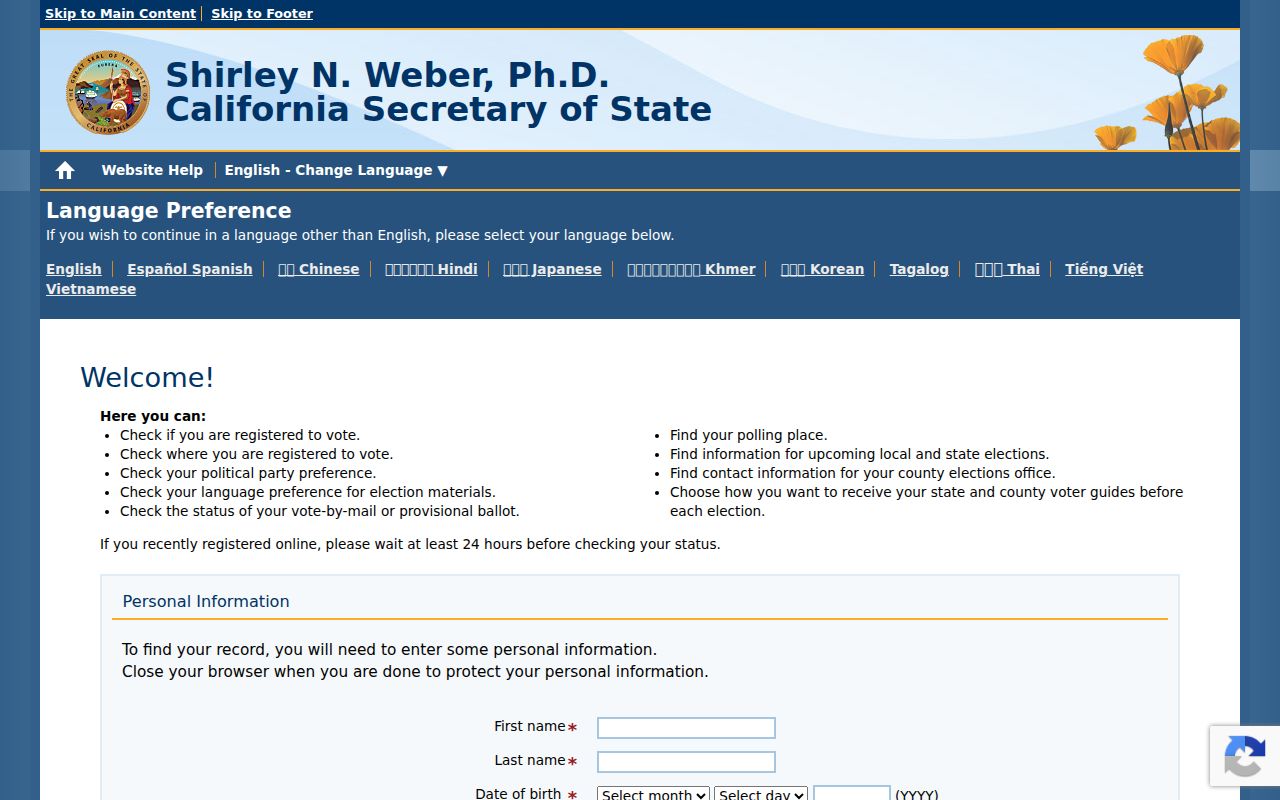
That boundary protects the voter and the searcher alike. Use a public source for a public role. Turn to the controlled data channel only when the law and the approved purpose genuinely fit.
Note: Orange County voter lookup is self-service and restricted; a public response should never be treated as a countywide resident list.
Orange County Vital Records
Birth, death, marriage, and divorce records live in different places. The Orange County Clerk-Recorder handles county birth, death, and marriage services. CDPH Vital Records keeps the statewide series, with birth records from July 1905 in its maintained coverage. Divorce decrees stay with Superior Court. A CDPH certificate of record is not the decree. California issues authorized and informational certified copies under Health and Safety Code sections 103525 and 103526, so there is no simple rule that every record opens after a set number of years.
- Birth
- Authorized copy needs a qualifying relationship or role and sworn statement; others may seek an informational copy.
- Death
- County or CDPH route; the copy type and statutory eligibility control access.
- Public marriage
- Authorized or informational copy may be available through the proper custodian.
- Confidential marriage
- Only parties or court or statutory authority can obtain it; there is no informational route.
- Divorce
- Superior Court holds the substantive file; CDPH supplies a certificate in its maintained series.
CDPH fees change on January 1, 2026. They run $31 for birth, $26 for death, $19 for marriage, and $18 for a dissolution certificate. A mail order needs the applicable form and a check or money order payable to CDPH Vital Records. An authorized copy also needs a notarized sworn statement. Events before July 1905 may require county, church, mission, cemetery, newspaper, and archive sources instead. The Orange County vital-records service page lays out the county application path. It also explains the split between county records and a court divorce file.
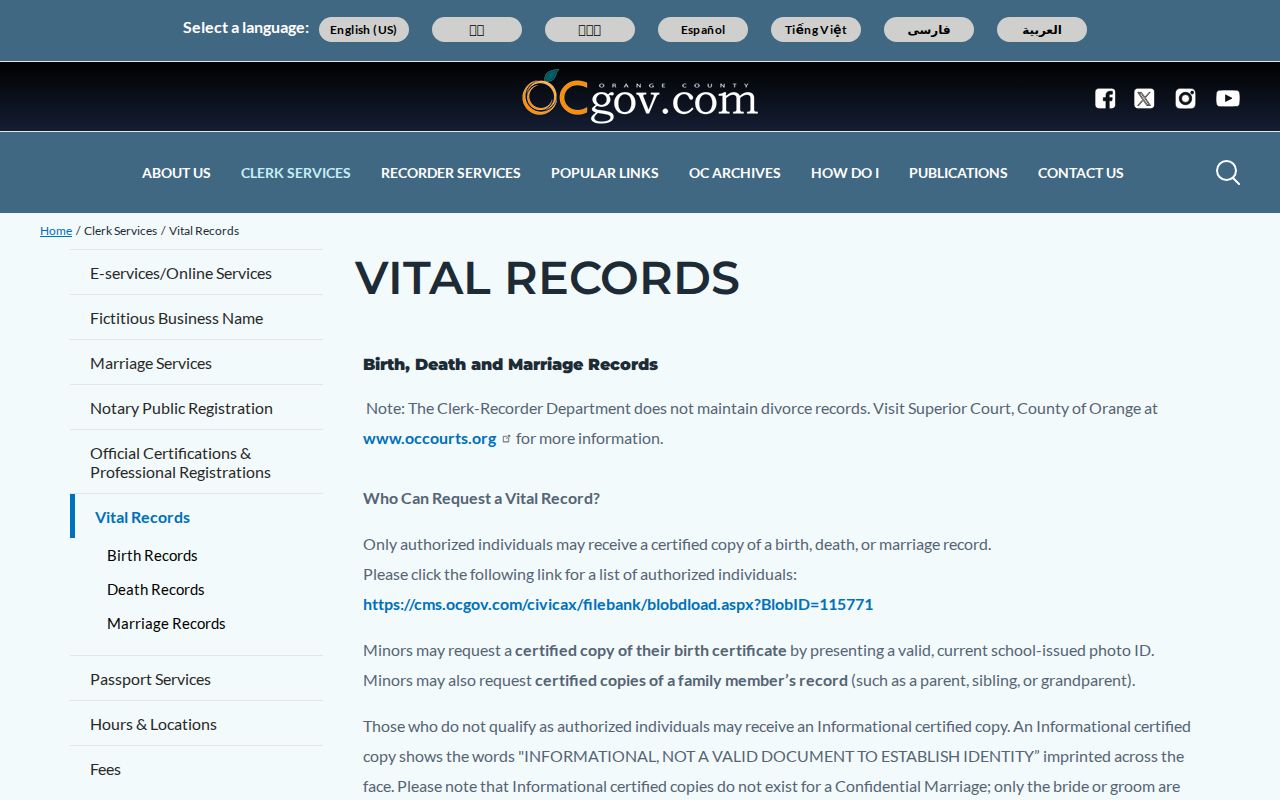
These copies can confirm an event, a date, a place, or a relationship. They will not produce a current resident list. A no-record result also fails to prove that the event never occurred elsewhere or under another spelling.
Orange County Court Records
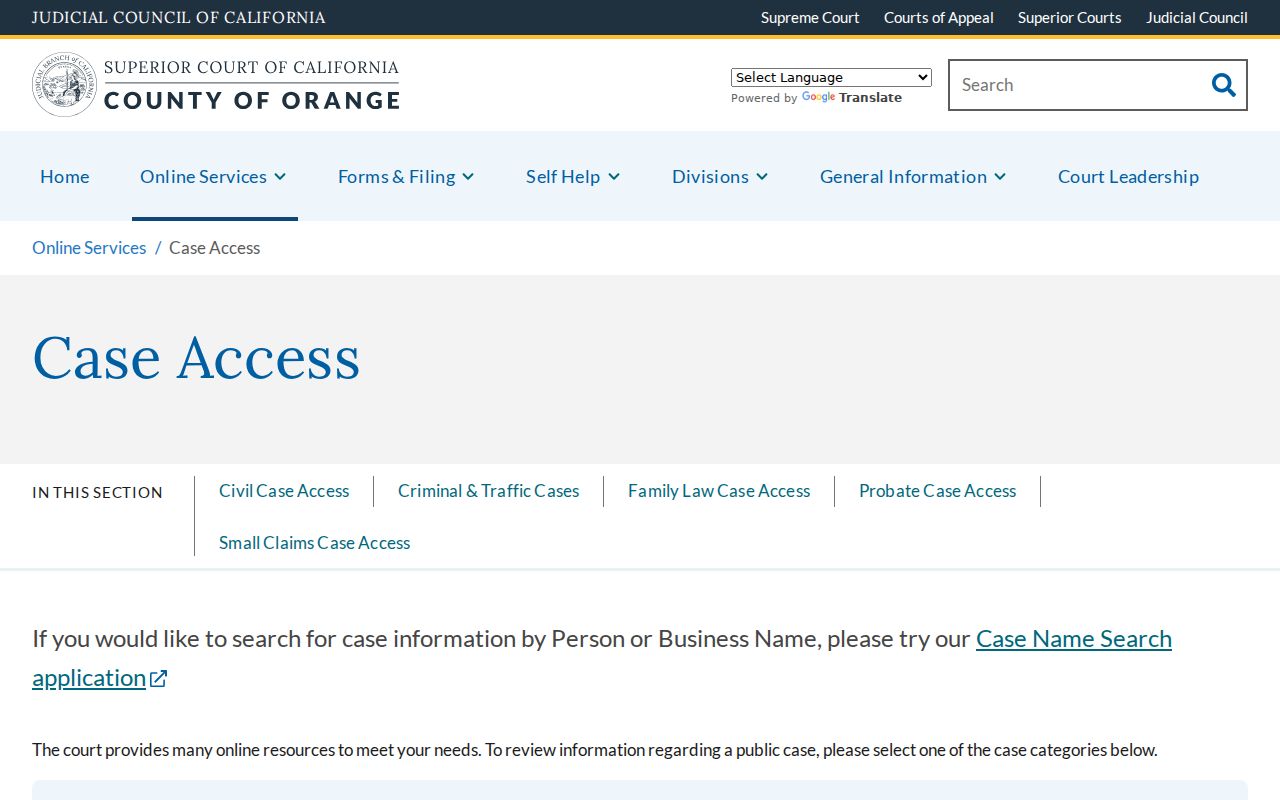
Superior Court Case Access sorts records into civil, criminal and traffic, family, probate, and small claims categories. Case Name Search needs free enrollment. It can locate a person or business by name, though remote coverage runs narrower than what the courthouse itself offers. The court describes records reaching back to the late nineteenth century, and civil copy instructions describe searches from 1889 to the present. Retention varies by case type. Older indexes sit at the appropriate Justice Center.
Remote civil coverage follows specific cutoffs. Unlimited or complex civil summaries reach from 1996, and limited civil summaries from 2005. Most civil documents filed on or after January 1, 2008 may be viewable or downloadable for fees. A case result can show a case number, caption, party roles, filing date, court location, status, hearings, and a register of actions. Still, a result is not the official file. Sealed, confidential, juvenile, adoption, and destroyed material stays unavailable. The Orange County Case Access hub is the right online entry point for a category or case number.
Form L-3009 is the court's fallback request. It asks for the parties, the document wanted, the filing date, requester details, delivery method, and payment. Copies run $0.50 per page. Certification costs $40 per document, and exemplification is $50. Mail requests need a 9-by-12 self-addressed stamped envelope. At the correct Justice Center, older indexes and files can be reviewed in person; an off-site file may take several days, and non-imaged review requires a photo ID deposit.
Note: A court party match is a legal-record connection, not proof of current residence or of every allegation in a filing.
Orange County Business Records
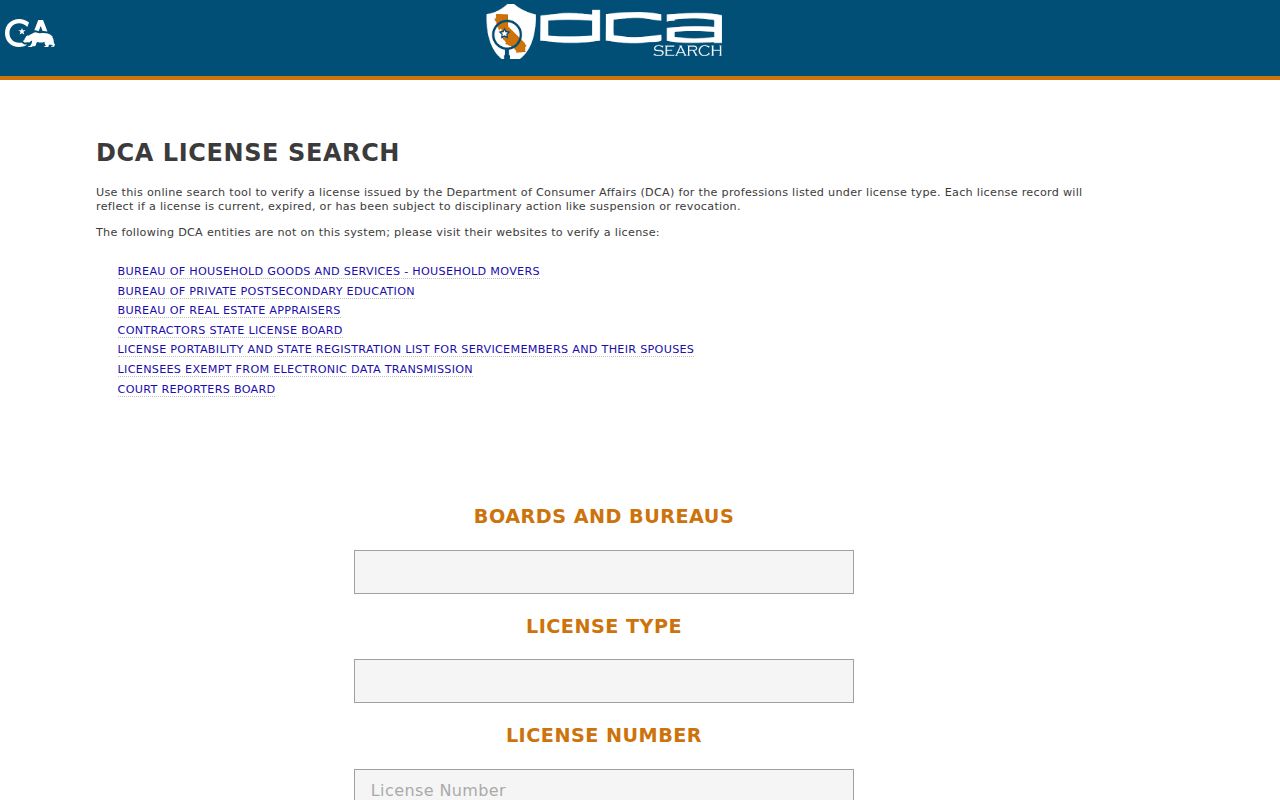
Business records help separate people who share a name. They describe affiliations, though, not households. Start with the state. California Secretary of State bizfile searches an entity name or number and may show status, jurisdiction, agent, address, and filing history. County fictitious business name records tie an assumed name to its registrant as of the filing date. The California Department of Consumer Affairs license search can show a license type or number, status, dates, and discipline links. Local permits, environmental health records, and alcohol licenses stay with their own custodians.
Read each role as shown. An agent's address is a service address. A permit applicant may be an owner, an architect, or a contractor. A license location may just be a business premise. Keep the filing date and the entity or license number before you compare a record to property or court information. A licensed name is a second dated source for lawful same-name control.
That line between a business tie and a home address keeps a public affiliation from being mistaken for a current residence. It also gives a lawful researcher a second dated source.
Orange County CPRA Records
The California Public Records Act is a fallback. It covers identifiable, existing, nonexempt records that are not exposed online. Timing matters. Government Code sections 7920.000 through 7931.000 usually give an agency 10 calendar days to decide whether responsive records exist. A possible 14-day extension may follow for unusual circumstances. That window is only for determination. Inspection is ordinarily free, and direct duplication costs may apply.
Ask the actual custodian. A city clerk holds council records, rosters, and city requests. A city building department handles permits and code cases inside that city. OC Public Works covers unincorporated land. The Clerk-Recorder uses its paid copy path. Courts use their own access rules. A request cannot force an agency to create a new list of residents. It also cannot bypass sealed, voter, vital, and safety restrictions.
The California Attorney General's CPRA explanation describes the request and response framework. Be specific. Name the custodian, record type, address or case identifier, date range, and preferred inspection or copy method. It helps an office search the record set it actually controls.
Orange County Same-Name Lookup
The 2020 Census counted 3,186,989 Orange County residents. The 2025 QuickFacts estimate is 3,149,507. QuickFacts also reports more than a million households across 2020 through 2024. With numbers like that, a common name can appear in several cities, parcels, court captions, license records, and newspaper notices without representing one person, so identity control is more than a formality. Keep middle initials, suffixes, compound surnames, diacritics, transliterations, co-parties, legal descriptions, case type, and the event date. Search marked and unmarked spellings. California AB 64 permits approved diacritical marks on new or amended vital certificates in 2026, which makes exact spelling useful even where older indexes omit the marks. Date-stamp every address. Compare two independent records before linking them.
- Roll
- A record set maintained for a defined purpose, such as assessment or voter administration, not a complete household list.
- Index
- A pointer to a record or party. RecorderWorks supplies identifiers, while a copy supplies the document itself.
- Parcel
- A mapped unit of land identified by an APN and legal description.
- Criss-cross directory
- A reverse directory arranged by street and number, useful for listed household or business clues at a point in time.
Note: A matching name and ZIP code is weaker evidence than a matching name, date, parcel, co-party, and record purpose.
Historical Orange County Residents Directory Shelves
Historical directories here are decentralized. Orange County contains 34 incorporated cities, and directories were issued city by city or as metropolitan and suburban volumes. No single authoritative publisher-and-year run exists. Check catalogs by city, title, and year. Never assume a Polk sequence fills every gap. OCPL may hold one slice, while municipal libraries, university special collections, FamilySearch, and the Orange County Archives hold different pieces.
A directory can place a named household at an address for an edition year, show an occupation or spouse notation, and include a reverse street section. Gaps happen too. A person can be missing for many reasons. Think of a publication gap, relocation, death, unlisted status, or a coverage boundary. The full collection trail lives in the Orange County city directory archive, which keeps local holdings apart from current parcel research.
OCPL Libraries Fill Orange County Record Gaps
OC Public Libraries keeps a rich genealogy shelf. Ancestry Library Edition works in any branch with a full-privileges card and full privileges. HeritageQuest Online and Fold3 add census, family-history, map, and military material. They reach it all through the same library access. OCPL Digital Newspapers can be viewed, printed, or downloaded. NewsBank carries the Orange County Register from 1987 to the current run. It also holds Irvine World News from 2003 to the current run.
Older neighborhood titles go back further. Coastline Dispatch covers San Juan Capistrano from 1931 to 1968. Laguna Beach titles span 1919 through 1989. The San Clemente Sun-Post ran from 1937 to 2021, among other south-coast papers. Community projects hold what government rolls leave out. OC Stories, Little Saigon Stories, Indigenous Voices of San Juan Capistrano, OC Surf Stories, and the OC Memory Lab preserve that community memory. Each keeps a piece of it alive.
The OCPL History and Genealogy collection is a practical fallback. It helps when a name, address, or family story is missing from a county portal. Library staff and local organizations can help identify a catalog item. Library staff are not official certifiers. Only the records office certifies a resident record.
Note: A library database can reveal a historical lead while still requiring the item title, issue date, page, and access conditions to be recorded.
Orange County Pre-1889 Records
Orange County split from Los Angeles County in 1889. Santa Ana became the county seat. A person who lived here in 1880 may therefore appear in a Los Angeles County census or record catalog. Search under rancho, subdivision, city, and parent-county labels along with the modern county name. The split touches census geography, early deeds, court references, directories, and archive catalogs.
Sanborn maps bridge old Santa Ana neatly. The digitized volume covers 1906 through August 1949. It holds 64 sheets. Building footprints, materials, uses, and older street context all appear. Pair a map with a directory entry, a deed legal description, or a newspaper notice. That combination can explain why a number or block looks different across years.
Orange County Resident Privacy
Some limits exist because the record itself is sensitive. Others come from a safety program. DMV personal information is protected. Utility customer accounts and many household members never appear in a public source. Juvenile, adoption, sealed family, and confidential marriage records follow separate rules. California's Safe at Home program gives qualifying participants a substitute mailing address and confidential voter registration under Government Code sections 6205 through 6216. It does not erase every older public record.
State privacy rights can reach covered businesses and data brokers. Still, a broker request does not erase a deed, court file, or assessment record held by its custodian. For a displayed Social Security number or other unlawful disclosure, contact the Clerk-Recorder about the source record. Do not just alter a reposted copy. A correction belongs with the record's custodian.
Lawful personal use. Orange County records can support family history, property research, civic work, and personal safety questions. Do not use a name, address, voter record, or directory entry to stalk, harass, intimidate, or harm another person.
Note: A privacy program can change what a lawful search returns without proving that the person or event never existed.